
Key takeaways
- Pastry brushes have the lowest median price of any search in our sample, at £5.61.
- Nail files and tongue scrapers follow at a median price of £5.99, against £16.99 across priced products.
- A skin cream priced at £1.28 had about 16,500 reviews, and coloured pencils at £1.50 about 15,200.
The cheapest things on Amazon UK, by median price per search, are small kitchen and grooming tools: pastry brushes have the lowest median price of any keyword we checked, at £5.61, followed by nail files and tongue scrapers at £5.99. The medians come from 193,782 priced products across 868 keywords, collected on amazon.co.uk on 23 to 24 September 2026.
The Data
A "cheapest things" list can mean two things. One is the single cheapest listing on the site, which is often a sample sachet, a spare part or a pricing mistake. The other is the kind of product that is cheap as a rule. We went for the second. For every search, we took the median price, which is the middle price when all the results are lined up from cheapest to dearest.
| Search | Median price |
|---|---|
| Pastry brush | £5.61 |
| Nail file | £5.99 |
| Tongue scraper | £5.99 |
| Tweezers | £6.17 |
| All priced products | £16.99 |
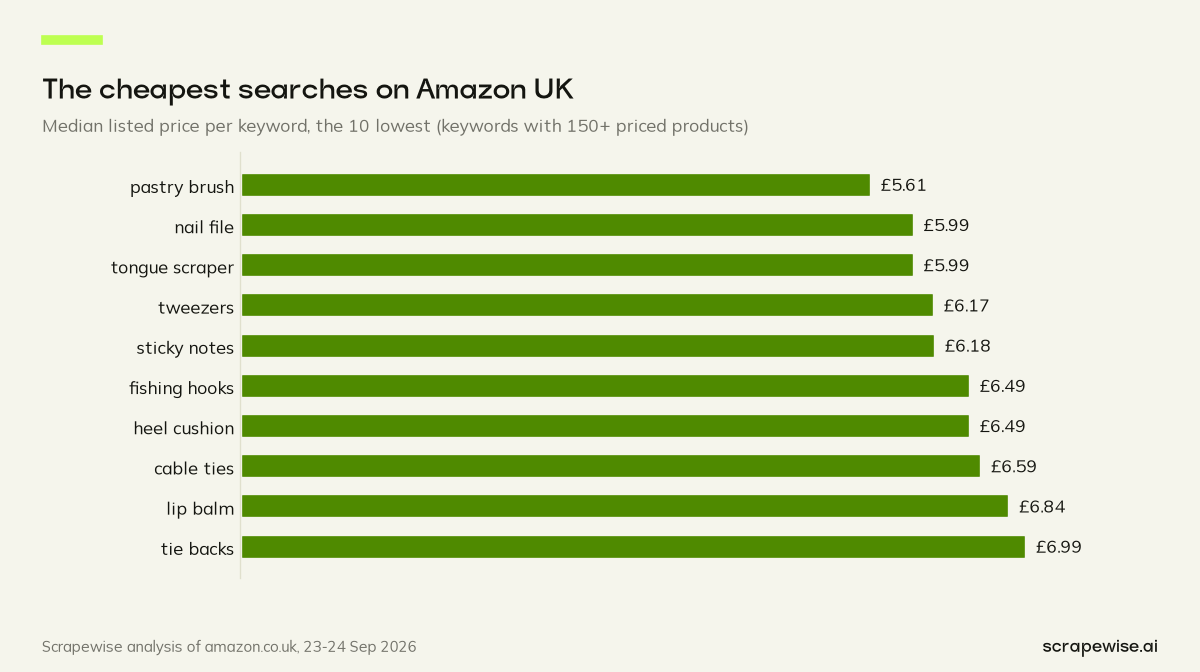
Pastry brushes have the lowest median price of any search we ran. The pastry is sold separately.
The pattern in the top four is easy to read. These are small, single-purpose tools, with no battery, no screen and no assembly. Each of them has a median price far below the median for all priced products, which is £16.99.
How Cheap Is Cheap on Amazon UK
The top of that list is only cheap relative to the rest of the site. To put it in context, we looked at the spread of all 193,782 priced products. The cheapest tenth cost £6.59 or less, and the dearest tenth cost more than £69.99. So even the cheapest search, at a median of £5.61, sits only just below the price that marks the bottom tenth of everything we saw.
At the other end of the scale sit searches like rattan furniture, with a median price of £259.97. Category medians are in average price on Amazon UK by category, and the strangest listings at the top of the price range are in the most expensive items on Amazon UK.
The single most common price in our sample is £9.99. If you sell cheap items, that is the price your shoppers see most often, and our post on charm pricing on Amazon UK looks at why so many prices end that way.
Cheap Items With Thousands of Reviews
The median tells you what a search usually costs. It hides a second, stranger group: single listings priced between £1.20 and £1.50 that still carry thousands of reviews. We picked out the cheapest items with the most reviews and grouped them by product type.
| Product type | Price | Reviews (rounded) |
|---|---|---|
| skin cream | £1.28 | about 16,500 |
| coloured pencils | £1.50 | about 15,200 |
| car air freshener | £1.20 | about 12,700 |
| limescale remover | £1.50 | about 11,800 |
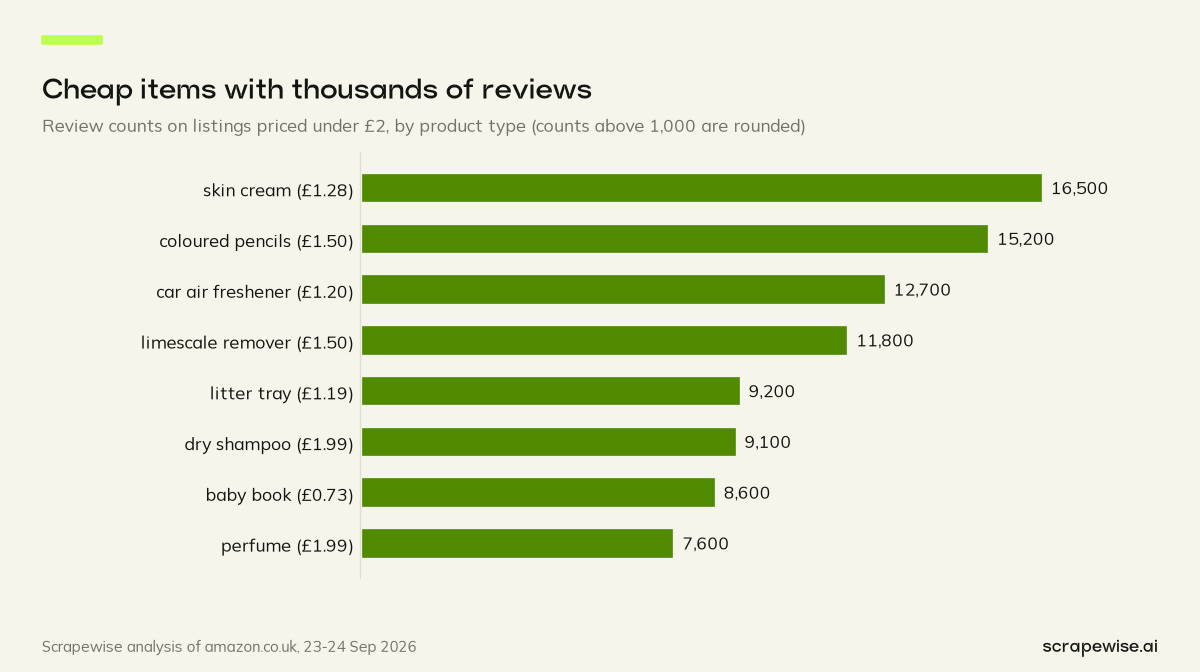
The coloured pencils, at £1.50 with about 15,200 reviews, have collected far more reviews than there are pence in the price.
Two caveats sit next to these numbers. First, the review count on a listing often belongs to a whole product family. Amazon can pool reviews across sizes and variants, so a £1.28 listing may carry reviews written about a larger size. Second, a very low price can be a small size, an add-on item or a price on the day we looked. We report the price we saw, and prices change.
Cheap Items Show Sales Labels More Often
Cheap products collect more than reviews. They also show sales labels far more often. Among priced products under £5, 53.6% showed a "bought in past month" label, and 11.2% showed 1K+ bought. Above £250, only 10.1% showed any label. This is a correlation, and a label is a rounded minimum, but the direction is clear. Every price band is broken down in the best price point to sell on Amazon UK.
What It Means for Sellers and Brands
Cheap searches are busy, and they are hard to win on price. When the median sits between £5.61 and £6.17, there is very little room between your cost and your price. A small change in pence is a large change in percent, and your margin feels every penny of it.
That makes cheap searches a good fit for two kinds of sellers. The first sells in volume and can live on a thin margin per unit. The second uses a cheap item as a way in, for example a basic tool that leads shoppers to a dearer kit. Neither plan works without knowing where the median sits in your search, and how far your price is from it.
For brands, very cheap listings are also worth watching for another reason. A £1.20 price on a product that usually sells for more can be a clearance, a multipack split or a seller testing the limits. To follow those moves over time, see our guide on how to track competitor pricing. The data side is in the price scraping guide for ecommerce.
How to Find the Price Floor in Your Own Searches
Before you price a cheap product, check where the floor of your search really is. It takes four steps:
- Pull the first few results pages for the searches you want to rank in, with the price of every product.
- Take the median price per search, and also the cheapest tenth. The median shows what shoppers expect to pay. The cheapest tenth shows how low the competition goes.
- Remove obvious outliers by hand, such as spare parts and single sachets, and check whether the cheap listings are really the same product as yours.
- Repeat the check on a schedule, so you see a move of a few pence when it happens.
If your price sits well above the median, your listing needs a reason to be chosen, such as a larger pack or better reviews. If it sits well below, check that you are not giving away margin you could keep.
How We Collected This Data
Everything above was collected by the Amazon Search API. We gave it 868 amazon.co.uk keywords and asked for 7 pages of results for each. Per product it returned the price, the review count, the star rating and the "bought in past month" label, plus the title we used to sort items into product types. The rate is €0.00015 per call, or €0.15 per 1,000 calls, with one results page per call. You can run it on demand or on a schedule and get the rows through the REST API or a CSV/Excel export. Make an account to find the median price in your own searches.
Selling at the cheap end and unsure where your price sits? Run your first searches with 5 free requests and pay per call from there. Try it now or compare pricing.
Paste a marketplace URL — get structured market data
Size categories, track assortments, monitor trends. Clean feeds ready for your BI stack.
97% accuracy on Amazon benchmarks · no credit card · book a 15-min call →